About Philosophy Expertise Activity Connect
Ira

Ira @mvanthof28

"A word is smoke. An act is fire.
Better the flame than the crackle."

0 Posts
0 Followers
0 Following
Live Feed

Digital Explorer

Web3 Pioneer

Active in the Web3 space since December 2010, Ira has been at the forefront of blockchain technology exploration. With over 12,900 posts on X, she's a consistent voice in the decentralized ecosystem.

Content Creator

A passionate writer and thinker who publishes articles on Medium & X about blockchain infrastructure, AI innovation, and the philosophical implications of emerging technologies.

Community Builder

With a growing community of 2,400+ followers, Ira engages daily with fellow Web3 enthusiasts, sharing insights, morning greetings, and thoughtful analysis of new protocols.

Creative Vision

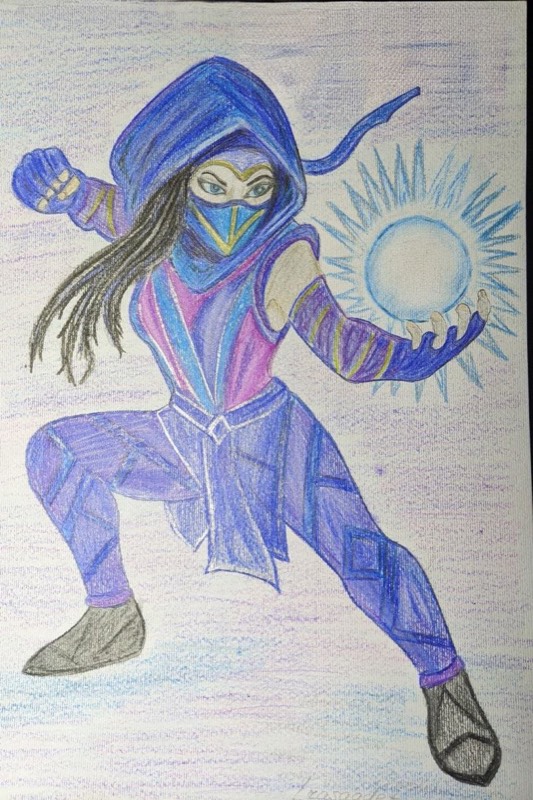
Hand-drawn artwork by Ira
✏️ Drawn by Hand
🤖 Animated by AI

From pencil sketch to living motion — art reimagined through artificial intelligence

The Spatial Internet

🌐 Visual Storytelling

Stonehenge. A Greek amphitheater. A movie theater. Your phone screen. Do you know what they have in common? It’s not architecture or technology. It’s the same human desire - to be closer.

For millennia, humanity has moved in one direction - closing the gap between ourselves and what matters to us. Every time that distance shrank, the world changed irreversibly. We are the generation that is removing it entirely.

One of Mawari’s founders, Takeo, said something very simple: "I want my children to be able to see my grandfather" And this is exactly why they are building the spatial internet - a place where memory lives through presence, and love exists beyond time and space.

But between desire and reality stands one massive problem that the industry prefers not to talk about out loud.

When you open Netflix, the movie is just there. You don’t think about servers or protocols. This became possible because someone invested trillions into the infrastructure that makes the experience seamless. For the spatial internet, this infrastructure does not exist. At all. AR glasses are appearing faster than people can process - but running them at full capacity is like trying to push a high-speed train on tracks built for a steam engine. And no tech giant is going to invest trillions before the demand is proven. It’s too early. Too vague. Too risky.

But in 2018, a major Japanese telecom challenged the entire industry: show us a live digital human in full 3D on a smartphone. The world’s largest tech companies participated. A three-person startup from Tokyo’s Shibuya district won. Luis, Takeo, and Aleksandr named the company after the Japanese word mawari - your surroundings. They literally named it after the world they intended to build.

Over eight years, they’ve weathered three waves without dissolving into any of them. They built a patented 3D streaming engine. They deployed a network of 180,000 nodes worldwide. They earned the trust of major telecoms and device manufacturers - those who don't bet on fog. And then, AI arrived. Everything changed - but this time, in Mawari’s favor.

AI trapped in a text box is like a movie on the radio. Powerful. Sometimes thrilling. But the most important thing is missing - presence. AI deserves a physical form. Spatial computing is its form in reality. One without the other is an unfinished story. Together, they create something that never existed before: digital beings that feel real. Beings that stand beside you, look at you, and respond.

Imagine: glasses translate a foreigner's speech in real-time while you look them in the eye. A digital guide appears next to you on an unfamiliar street in a foreign city. Your child’s favorite character stands in the middle of their room and talks to them. This isn't science fiction - it’s already happening in fragments. The only thing missing for the full picture is that very infrastructure no one talks about.

The companies that will define the spatial internet will be built in the next three years. @mawariXR has been standing in this window for nearly a decade. And this future belongs to everyone who builds it along with them.

Optimum: Decentralized Data

Imagine sending a letter to a friend, but instead of a single envelope, you break the text into hundreds of mathematical equations and send them through different post offices. Madness? No - this is the genius of RLNC technology.

The @get_optimum company has turned this into a true art of digital transmission.

In the traditional internet, your data travels like a strict military parade - each packet must arrive in a specific order, otherwise the whole picture falls apart. RLNC, on the other hand, works like a master puzzle that can assemble the entire picture by receiving any random puzzle pieces.

The technology takes your data and creates linear combinations out of it - each packet becomes a unique element of the original information. And the mump2p protocol turns this math into practical magic. When a traditional network stumbles over an obstacle (a connection drop, channel overload), mump2p with RLNC simply flows around it, just as water flows around a stone.

Moreover, the system turns obstacles into opportunities: the more paths there are for the data, the more reliable the transmission. The most amazing thing is the ability to self-organize: each node makes decisions independently, but the result turns out to be perfectly coordinated.

The difference from classic protocols is obvious at every level:

Traditional protocols TCP requires the delivery of all packets strictly in order. A single loss halts transmission and drastically reduces throughput, whereas RLNC reconstructs the original data from any random set of fragments, providing a colossal speed boost in networks with data loss.

Dynamic redundancy Reed-Solomon codes require guessing the loss rate in advance, whereas RLNC generates exactly as many redundant fragments as the channel allows - right in real-time.

Peer-to-peer transmission Classic p2p networks send full copies of blocks between nodes, while mump2p + RLNC exchanges only random fragments. Hence - block propagation in ~150 ms and a twofold increase in overall network speed.

Channel utilization Traditional protocols leave bandwidth reserves unused. RLNC fills the entire available channel with encoded fragments and does not lose efficiency even at peak loads.

Network resilience To bring down a classic transmission, it is enough to damage or delay a portion of the packets. With RLNC, an attacker or a failure would have to destroy the vast majority of delivery paths, making the network incredibly survivable.

This is how Optimum unlocks free and ultra-reliable decentralized data transmission for everyone.

Creative Presentation

Dubhe: On-Chain Gaming

🎮 Interactive Vision

The Appeal of On-Chain Games and the Skepticism Surrounding Them: Which Will Prove Stronger?

You know, there is a special genre of debate - the kind where both sides are right, and that is precisely why the argument doesn't fade for years. On-chain games belong to this genre. And the main question here sounds almost dramatic, what will prove stronger - the appeal of on-chain games or the skepticism surrounding them?

On-chain games are one of the strangest and most alluring experiments of the modern digital era. There is something almost alchemical about them: an attempt to merge gaming - a space of freedom, excitement, and fantasy - with blockchain, this cold, strict, mathematical mechanism of trust. And the debates around them are endless. On one side, there is enthusiasm, the promise of a new era where the player truly owns what they fought for, saved for, built, and cherished. On the other, there is mockery: a sold idea instead of a game, economy instead of pleasure, and a technology searching for a problem it invented itself

The Magnetism of the Promise

How much money and time have gamers spent on Steam? I know people who have invested thousands of dollars in skins, characters, and upgrades. One acquaintance of mine spent as much over three years as an old car costs. When the game was shut down, instead of compensation for the loss of digital property - into which he had invested not just money, but time, emotion, and strategic thinking - he received a letter "Thank you for being with us"

In a traditional game, the developer can change the rules at any moment. Yesterday, your character was the strongest; today, a patch is released, and they are mediocre. You invested based on one set of rules, but you are forced to play by another. The traditional gaming industry has been built for decades on a silent compromise: the player pays but does not own; uses but does not dispose of

On-chain games have offered a different logic. For the first time, items, characters, plots of land, achievements, and even the game history itself can be recorded in an open, independent system. They cannot be taken away, modified, or reset. This is not a metaphor; it is architecture. The very idea of true ownership possesses an incredible power of attraction. Because it resonates with something very basic in human nature: the desire for invested labor to have lasting value

An on-chain game places the rules into a smart contract, where the code is open and the mechanics are transparent. You know exactly how every gear works. If changes are made, it happens through a DAO vote - a collective decision.

And then there is the third reason for the attraction - interoperability, an almost utopian idea. Imagine a world where your sword, obtained in one game, could become a relic in another, where digital identity does not die within the limits of a single project, where gaming ecosystems are not isolated but connected. For now, it is more a dream than reality, but the possibility itself fires the imagination. On-chain games are not just selling a mechanic, but a new myth of digital property, freedom, and continuity

A Cold Shower of Reality "Show Me the Game"

But every utopia has its own gravity, dragging it down. And here, skepticism is simply justified. Pragmatic gamers ask one simple question, and it is devastating in its simplicity "Where is the game that people want to play?" Not to invest in, not to farm, but to play for pleasure, so that it’s impossible to tear oneself away

And here, an awkward silence ensues. Because most games by 2026 still have primitive mechanics wrapped in a financial layer. On-chain games have encountered the blockchain trilemma: how to make a game decentralized while also being fast and complex? Blockchains were not created to calculate the physics of a bullet’s flight. They were created for transferring money.

The Collision

What will prove stronger? The romance of eternal worlds or the cynicism of technical imperfection? Here, two irresistible forces collide. On one side are the Dreamers, yearning for eternal Autonomous Worlds independent of corporations. On the other are the Skeptics, armed with cold pragmatism

This is exactly where a catalyst is needed - a tool that will turn the raw magic of blockchain into a working mechanism. @DubheEngine acts not just as a developer tool, but as the chief negotiator between the utopia of blockchain and the reality of game development. It brings ECS architecture to Web3 - the grammar in which all modern masterpieces of traditional game dev are written. It also breaks the world down into fundamental particles - Entities, Components, and Systems

For skeptics, this means the end of clunky programming in Web3. Dubhe allows developers to create infinitely complex mechanics without turning smart contracts into a tangled mess. On the contrary, it takes on the optimization of data routing and the synchronization of states between what the player sees and what is permanently recorded on the blockchain. It creates a bridge across which data flows with minimal loss. It is an illusion of seamlessness, backed by brilliant mathematics

Thanks to the strict and modular architecture imposed by the engine, the Autonomous World becomes like a LEGO set of perfect precision. A developer creates the basic rules, for example, space physics and ships. Dubhe guarantees that these new modules integrate seamlessly into the original world without breaking its core. The Dreamers get their eternal, expandable cosmos, while the Skeptics get ironclad security where user-generated content does not wreck the game

The debate between the appeal of on-chain games and skepticism will end on the day when games appear that people love before they even realize they are on-chain. And it is at that exact moment that Dubhe Engine will forever write its name into the history of digital evolution


Words & Wisdom

Truth is not in words, but in deeds.

— Ira
📖

Deleuze & Smooth Space

Inspired by Gilles Deleuze's concept of smooth space — opposing rigid hierarchies and celebrating the nomadic freedom that decentralized tech enables.

🎭

Baudrillard & Simulacra

Drawing from Jean Baudrillard's theory of simulacra, exploring how Web3 transforms speculation into refined entertainment and meaningful digital experience.

🔑

Digital Freedom

"Web3 is primarily a story about personal freedom and self-sufficiency — the opportunity to be as independent in the digital world as we strive to be in reality."

🌱

Action Over Words

"A word is smoke. An act is fire." — Believing that true impact comes through action, not merely discourse. Technology should stop being a barrier and become an extension of liberty.

Areas of Focus

⛓️

Blockchain Infrastructure

Deep knowledge of L1/L2 solutions, sub-second finality, and protocol architecture including Monad, MegaETH, and more.

DeFi L2 Protocols
🤖

AI & Machine Learning

Exploring AI data, FLUX models, image generation, and the intersection of artificial intelligence with decentralized systems.

FLUX Grok AI Data
🏗️

Dev Infrastructure

Kubernetes clusters, bare-metal nodes, GPU circuits, and unified network architectures — covering Flexnode and distributed compute.

Flexnode GPU DevOps
🎮

Game & Creative Engines

Championing creative infrastructure like Dubhe Engine — combining advanced technology with creative vision for the next wave of digital culture.

Dubhe GameFi Creative

Latest Highlights

Mar 26, 2026

GM friends ☀️ May the freshness of spring bring you inspiration and fuel your ideas with energy 🌷

💬 Community Energy
Mar 20, 2026

Flexnode @get_optimum — a unique engineering stack combining Kubernetes clusters, bare-metal nodes, and home nodes into a unified network. Automatic computation deployment.

🏗️ Infrastructure
Mar 6, 2026

Future Impact and Global Potential of Dubhe Engine — Creativity shapes culture, and creators determine the future. Dubhe Engine occupies a unique position as fundamental infrastructure.

🎮 Creative Tech
Jan 18, 2026

For me, Web3 is primarily a story about personal freedom and self-sufficiency. The most rewarding moment comes when technology stops being a barrier and becomes an extension of liberty.

🔑 Digital Freedom
Jan 17, 2026

Exploring FLUX.2 klein 9B model — stunning clarity and color palette. AI image generation is reaching new heights in quality and detail.

🤖 AI Exploration

Let's Connect

Ira

Ira

Web3 Explorer · Content Creator · Digital Philosopher

"Truth is not in words, but in deeds."

Member since December 2010